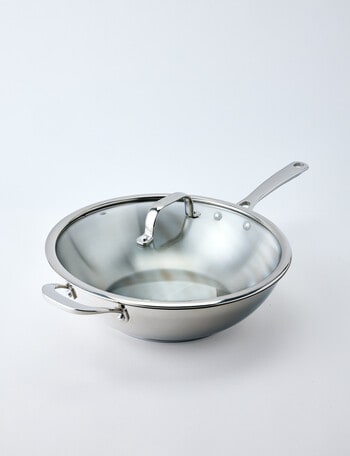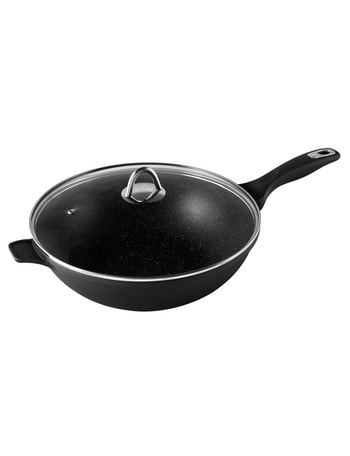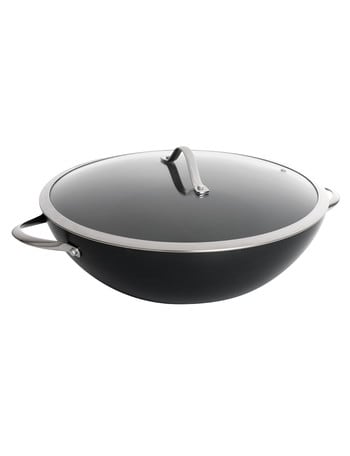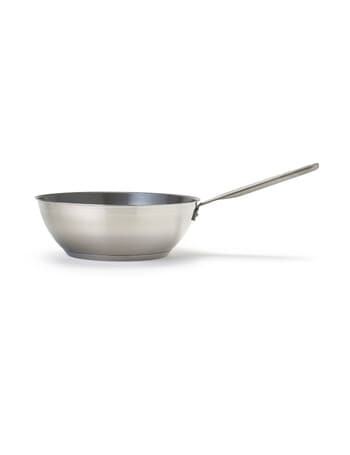

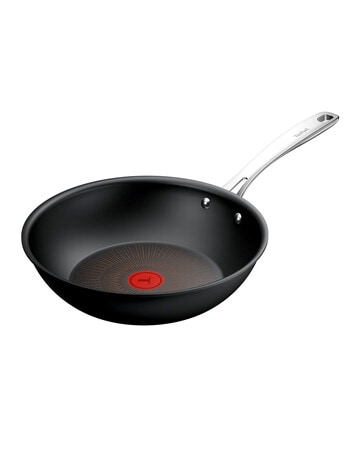
Traditional stir-frying and rapid high-heat cooking require a specialised bowl-shaped design to manage quick temperature shifts and constant movement. At Farmers NZ, our collection of woks includes durable solutions from trusted brands like Baccarat and Tefal, intended to meet the demands of Asian-inspired recipes and versatile domestic cooking. The high, sloping sides of these vessels allow ingredients to be tossed easily while maintaining a concentrated heat zone at the base.
The utility of a stir-fry pan lies in its ability to cook food rapidly, preserving crisp textures and vibrant flavours. Whether you are searching for a professional-grade hard anodised model, a traditional raw carbon steel finish, or a modern non-stick version equipped with heat-indicator technology, these specialized pans are engineered to handle frequent agitation and high temperatures seamlessly.
Balancing rapid heat conductivity with everyday ease of maintenance is key to finding the right stir-fry pan for your kitchen routine:
Modern stir-fry pans are commonly constructed with flat bases to ensure steady, direct contact with electric and ceramic cooktops. This design ensures that the thermal mass is heated centrally and evenly, which is essential for achieving a high-heat sear without frustrating cold zones. While traditional round-bottom styles require specialiSed gas hobs, the flat-bottomed ranges from Baccarat and Tefal provide a versatile solution that transitions perfectly across all modern heat sources, including induction hobs.
While primarily used for high-velocity tossing, the exceptional depth of a wok makes it an incredibly multi-functional asset for other culinary techniques. The generous volume is highly utiliSed for deep-frying, as the outward-sloping sides naturally help contain oil splatters. It also serves as an excellent base for steaming when paired with a traditional bamboo basket. Selecting a vessel with a premium interior coating, such as the Baccarat Stone or iD3 ranges, ensures long-term resistance to surface abrasion.
How do I choose the right size wok for my household?
Size is typically determined by the diameter of the top rim. A 30cm to 35cm wok is the standard choice for family meals, providing ample surface area to comfortably cook for three to four people. Smaller 20cm to 28cm models are excellent for individual portions or side dishes, while larger variants are best suited for intensive batch cooking.
Can a wok be used on an induction cooktop?
Yes, many modern flat-bottomed woks, including the Baccarat iD3 and Tefal induction series, are engineered with magnetic stainless steel bases specifically to make them fully compatible with induction hobs. It is recommended to check the base for the induction coil symbol to ensure total compatibility before purchasing.
What is the benefit of hard anodised compared to non-stick woks?
Hard anodised woks excel at retaining and distributing intense heat evenly, making them the preferred choice for traditional high-heat searing and frying methods. Non-stick woks are often favored for quick weekday convenience, as their slick coatings require substantially less cooking oil and offer swift, hassle-free cleanup.
How should I clean and maintain my wok to ensure its longevity?
To preserve the performance of your cooking surface, hand-washing with a mild dish detergent and a non-abrasive sponge is highly recommended. While some modern collections claim to be dishwasher safe, standard machine cycles can degrade non-stick elements over time. Always ensure the pan is completely dry before nesting it away for storage.