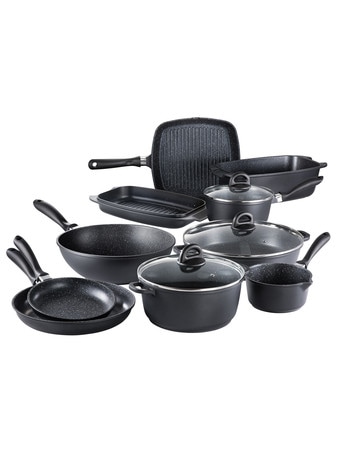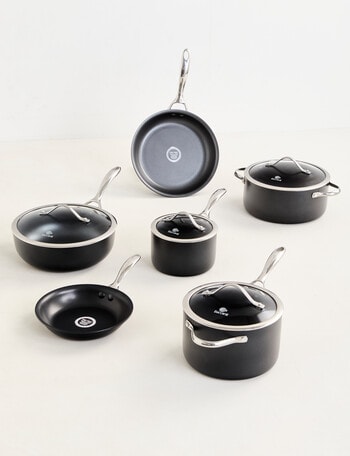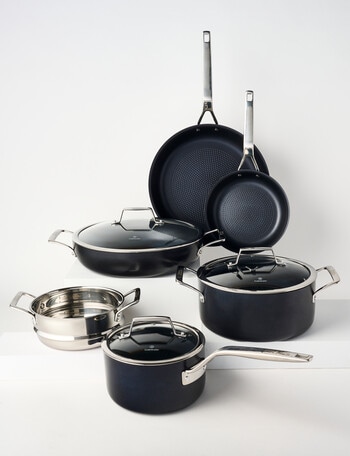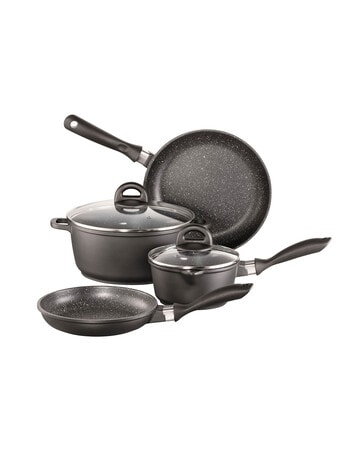
Equipping a kitchen with a coordinated collection of tools ensures that the appropriate vessel is available for every stage of meal preparation. At Farmers NZ, our cookware sets feature comprehensive ranges from leading brands like Baccarat and Tefal, providing a foundational selection of sizes and shapes. Whether you are setting up a new home or upgrading your existing inventory, selecting a multi-piece set intended for consistent performance simplifies your daily cooking routine.
The composition of a cookware set is typically determined by the material and cooking surface best suited to your culinary habits. Choosing the right set type impacts heat management, durability, and how you clean up:
A significant benefit of choosing coordinated sets is the ease of kitchen organisation. Many designs from established ranges are intended to nest together or share lid sizes, which helps manage cupboard space more effectively than a collection of mismatched items. Having a uniform look with matching handles and finishes also contributes to an organised kitchen environment, allowing for a seamless transition from the stovetop to the dining table for stylish service.
When all pans in a kitchen share the same base construction, it allows for more predictable heating patterns and response times. Many of the Baccarat and Tefal collections available at Farmers NZ are designed with magnetic, impact-bonded bases for seamless induction compatibility, as well as being perfectly suited for gas and electric hobs. This consistency is particularly useful for complex recipes that require timing different ingredients to finish at once with reliable, matching hardware.
What is the advantage of choosing a cookware set over individual pans?
A set is often more efficient for establishing a complete kitchen foundation. It ensures a logical progression of sizes that are designed to work together, whereas buying individual pieces may lead to overlapping capacities or incompatible lids. Sets also provide a uniform appearance and materials, which ensures consistent cooking results across every vessel in the collection.
How do I know which set size is right for my kitchen?
The ideal set size often depends on the frequency of your cooking and the number of people you typically feed. Small foundational sets are commonly suited to those with limited storage or smaller households. More comprehensive multi-piece collections are often preferred by home cooks who engage in multi-course preparation or batch cooking and require several vessels to be used simultaneously.
Are the lids in these sets interchangeable?
In many established cookware ranges, lids are designed to fit multiple vessels of the same diameter within that specific collection. This versatility helps reduce clutter in the kitchen and makes it easier to find the correct lid during a busy cooking process. It is a common feature in high-quality sets to have lids that fit both a saucepan and a sauté pan of the matching size.
How should I care for my cookware set to ensure it lasts?
To maintain the finish and performance of your cookware set, hand-washing with a mild detergent is the most frequent recommendation. While many stainless steel and non-stick collections are technically dishwasher safe, regular hand-washing is commonly suggested to preserve the interior surfaces and exterior brilliance over many years. Ensuring each piece is dried thoroughly before nesting them for storage also helps prevent surface wear.