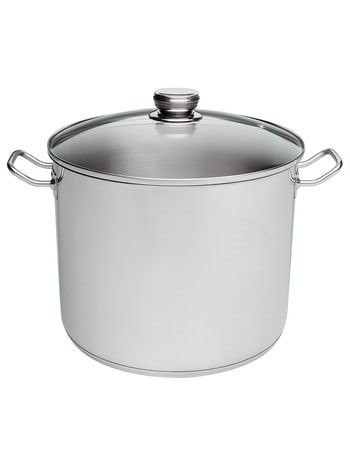
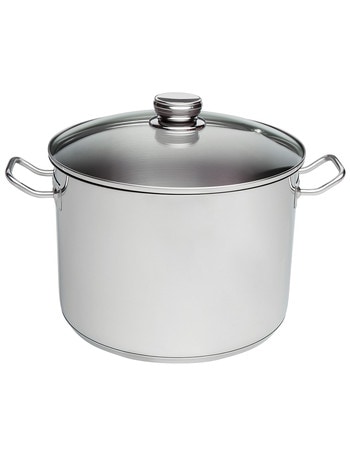
Preparing large volumes of liquid, such as foundational stocks, soups, and stews, requires the specific capacity of a stock pot. At Farmers NZ, our collection features high-performance stock pots from brands like Baccarat, designed to manage ingredients that need to be fully submerged or simmered for extended periods. Having a high-capacity pot available is essential for those who engage in batch cooking or frequently prepare meals for larger groups.
Built to provide steady heat distribution across a significant volume, these pots are commonly used for tasks like boiling pasta, blanching vegetables, or preparing bone broths. Most designs include sturdy, dual handles to ensure stability when moving a full vessel from the stovetop to the counter. The height of the pot helps to minimise evaporation, which is beneficial for slow-cooking processes where maintaining liquid depth is required.
The choice of a stock pot often depends on the scale of your meal preparation and the desired material performance. The Baccarat Gourmet range is frequently selected for its high-volume capacities, including 12-litre and 16.5-litre options, which are suitable for large-scale soup and stock production. For those seeking professional-grade precision, the Baccarat iD3 range offers stainless steel stock pots with impact-bonded bases, ensuring rapid and even heat distribution to prevent hot spots during long simmers.
Selecting the correct capacity ensures that ingredients have enough room to circulate in boiling water, which is a common requirement for achieving an even cook in recipes involving bulk quantities. Larger pots, such as the 24cm diameter models, are intended to provide a versatile solution for family-sized pasta dishes or preserving. Matching the base diameter of your stock pot to your largest stovetop element helps maintain energy efficiency and ensures the thermal mass is heated centrally and consistently.
Modern stock pots are constructed from heavy-duty stainless steel to withstand the weight of several litres of liquid while maintaining their physical integrity. Using non-reactive materials ensures that long-duration cooking does not affect the flavour profile of your broths or acidic sauces. Most designs in our collection feature well-fitting glass or metal lids to manage moisture retention, helping to reduce cooking times and lock in nutrients during the slow-cooking process.
What is the difference between a stock pot and a Dutch oven?
A stock pot is typically taller and lighter, designed primarily for liquid-based tasks on the stovetop like boiling and simmering. A Dutch oven is usually made of heavier materials like cast iron and is designed for both stovetop and oven use. Stock pots are commonly preferred for boiling large quantities of water or making thin soups, whereas Dutch ovens are suited to braising and slow-roasting where oven transition is required.
How do I choose the right capacity for my household needs?
Capacity is typically measured in litres, and the choice depends on your frequency of batch cooking. For standard family use, an 8-litre to 12-litre stock pot is a frequent choice as it provides enough space for soups or large portions of pasta. For those who frequently cook for events or engage in large-scale food preservation, higher-capacity options like the Baccarat 16.5-litre pot are often more appropriate to handle the increased volume.
Are these stock pots compatible with induction cooktops?
Induction compatibility depends on the magnetic properties of the pot's base. Many modern stainless steel stock pots, including those in the Baccarat Gourmet and iD3 ranges, are built with induction-ready magnetic bases. It is a common practice to check the manufacturer's specifications or look for the induction symbol on the base of the pot to ensure it will function correctly with your specific kitchen stovetop setup.
What is the best way to clean and maintain a large stock pot?
To maintain the polished finish and thermal performance of a stainless steel stock pot, hand-washing with mild detergent and a soft sponge is the most frequent recommendation. While many large pots are technically dishwasher safe, their size can often impede the spray arms or take up excessive room. Ensuring the pot is dried thoroughly before storage helps prevent water spots and maintains the integrity of the dual-handle attachments over time.